Skip to content

QUANTUM C&SServices for Kubernetes

OVERVIEW

QUANTUM C&S Services for Kubernetes

01

Kubernetes Engineering

Maximize Kubernetes Utilization

  • Automated cluster installation and management with IaC
  • Legacy application migration
  • Automated CI/CD pipeline implementation
  • Monitoring and logging service integration
  • Security configuration and management
  • Helm chart development and deployment
  • Network configuration
  • Storage backup and solutions
  • Operations and support
02

Kubernetes Consulting

Accelerate Kubernetes Adoption

  • Cluster architecture design
  • Deployment strategy development
  • Performance optimization
  • Disaster recovery planning
  • Multi-cloud and hybrid cloud solutions
  • Kubernetes upgrades and migration
  • Kubernetes CI/CD architecture design
  • Monitoring and logging configuration
  • Kubernetes and Kubernetes development training

SERVICES

Kubernetes Service Stack

We design infrastructure, data services, deployment automation, and observability as one operable enterprise platform.

INFRASTRUCTURE AS A SERVICE

Infrastructure as a Service

Kubernetes Platform

  • k8s version : 1.24.x ~ 1.30.x
  • Ubuntu-based OS (18.04, 20.04, 22.04)
  • Redhat-based OS (7.x, 8.x)
  • CRI : Docker/ Containerd/ CRI-O
  • CNI : Calico/ Flannel/ Cilium/ Multus
  • CSI : NFS/ Ceph RBD/ Cephfs (Rook-ceph and Cephadm)

Software-based LoadBalancer

  • L4 LoadBalancer : HAProxy and VIP manager
  • L7 LoadBalancer : Nginx Ingress controller, Istio Ingress controller

QKS Repository for Air-gapped Environments

GPU accelerator

Enables the use of various GPUs for MLOps workflows in Kubernetes environments.

PLATFORM AS A SERVICE

HA Database Service on Kubernetes

Configuration

  • Active-Active/ Active-Standby

Supported Databases

  • RDBMS : MySQL, MariaDB, PostgreSQL
  • NoSQL : ElasticSearch, MongoDB, Couchbase, Cassandra, Hadoop

It also supports middleware such as RabbitMQ and Kafka, with Redis available as a caching service.

CI/ CD

Streamlining CI/CD with GitLab, Harbor, and ArgoCD

Integrating GitLab, Harbor, and ArgoCD creates a seamless, automated workflow for building, securing, and deploying applications.

Code changes pushed to GitLab are built and tested automatically, while container images are securely stored and scanned in Harbor.

Deployments are managed and synchronized through ArgoCD.

Logging Service

  • EFK Stack Service/ Loki Service
  • Kubernetes platform service log analysis
  • Application pod log collection and analysis
  • Visualization dashboards with Kibana and Grafana
  • Includes standard configuration; advanced requirements need customization and development

Monitoring Service

  • Prometheus/ Grafana Service
  • Resource monitoring and operations for databases, virtual machines, containers, and more
  • Alert configuration through Email, Slack, and other channels
  • Includes standard configuration; advanced requirements need customization and development

NOTABLE QKS FEATURES

Notable QKS Features

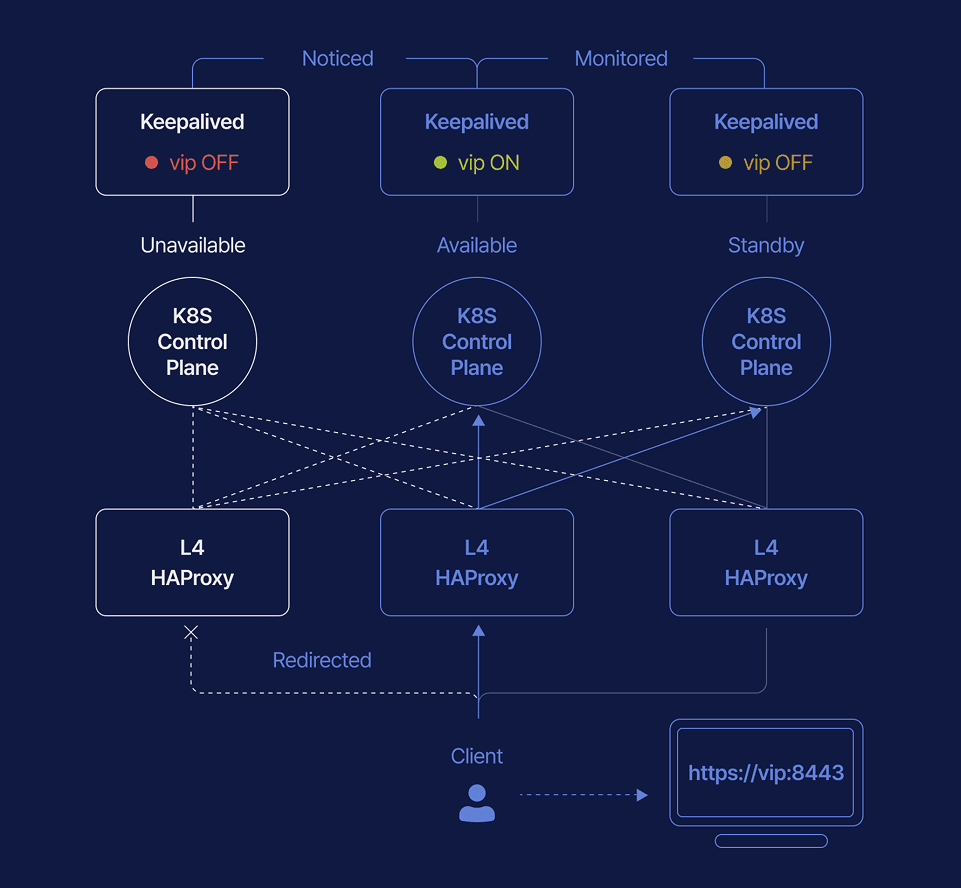
Kubernetes High Availability configuration using HAProxy and VIP Manager

Keepalived (VIP Manager) and Layer 4 (L4) HAProxy are deployed as static pods on each control plane node to ensure high availability for the Kubernetes control plane.

Keepalived monitors the health of each node and activates the virtual IP (VIP) on a healthy node. The L4 HAProxy load balancer routes client requests to the active VIP to maintain continuous access.

If a node fails, Keepalived moves the VIP to another healthy node and HAProxy redirects traffic to keep the service available. This configuration ensures robust and reliable Kubernetes cluster management.

Kubernetes high-availability architecture using Keepalived and HAProxy

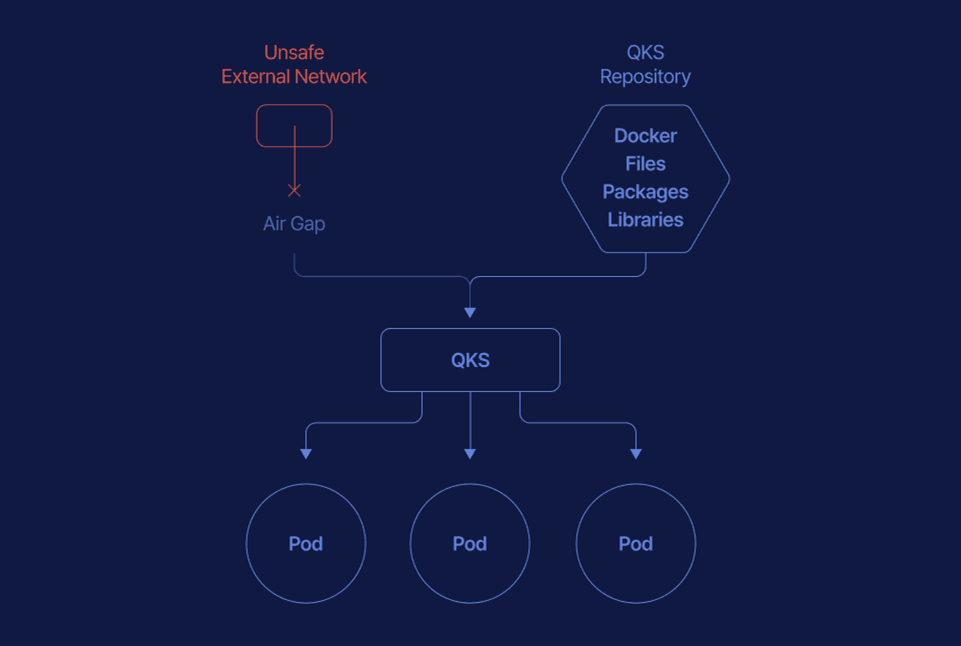
QKS Repository – Tailored for Air-gapped Environments

Drawing on extensive experience in sensitive air-gapped environments such as government and financial institutions, we provide a QKS Repository designed for environments without internet connectivity.

QUANTUM C&S has expertise in installing and operating Kubernetes in offline environments. Ansible fully automates the collection of required packages, images, and Helm charts.

Even in offline environments, users can pull images from the QKS Repository with commands such as “docker pull,” providing an experience similar to working with an internet connection.

QKS Repository architecture for an air-gapped environment